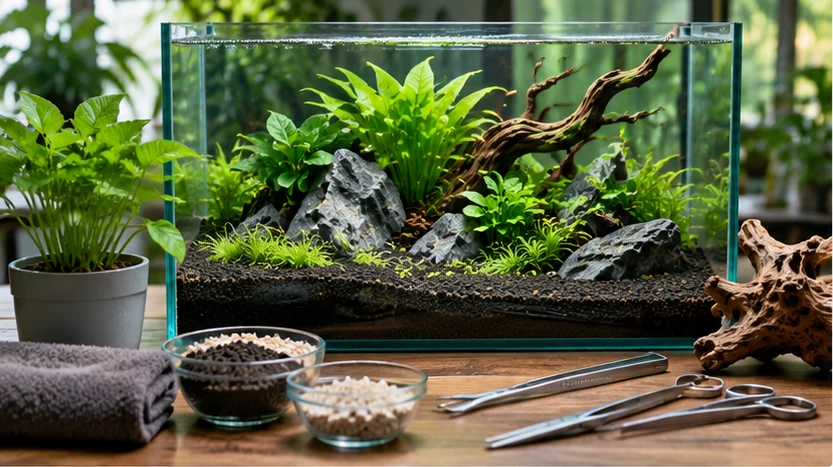
A successful aquarium starts with a plan for the animals, not a kit or decoration. Choose the species first, research their adult size and social needs, then build an environment that can meet those needs for their whole lives.
1. Choose the aquarium and location
- Choose the largest practical aquarium that fits the species’ adult size, activity and group requirements. More water volume generally changes temperature and chemistry more slowly than a small volume.
- Prioritise footprint and swimming length where the species needs them; litres alone do not describe usable space.
- Use a purpose-built, level stand capable of supporting the filled aquarium. A filled aquarium is extremely heavy.
- Keep the tank away from direct sun, radiators, draughts, aerosol sprays and household chemicals. Ensure access to a suitable electrical outlet and plan safe cable drip loops.
2. Select the equipment
- Filter: select a filter with adequate biological media and flow appropriate to the fish. The filter must run continuously; do not switch it off overnight.
- Heater: use only where required by the species and room conditions. Choose a reliable thermostatic heater and verify it with a separate thermometer.
- Lighting: provide a consistent day/night cycle. Match intensity and duration to plants; avoid leaving lights on continuously.
- Substrate and décor: use aquarium-safe materials, smooth edges where fish may contact them, stable structures and species-appropriate cover.
- Water conditioner and tests: have a dechlorinator suitable for the local water supply and tests for ammonia, nitrite, nitrate, pH and, where relevant, GH/KH.
3. Prepare and fill
- Rinse substrate and hardscape with clean water as appropriate. Never use soap, detergent or household cleaning chemicals.
- Position and level the empty aquarium, add substrate and stable décor, then fill carefully to avoid disturbing the layout.
- Treat tap water with a conditioner that addresses the disinfectants used by the water supplier. Follow its label for the actual volume being treated.
- Start the filter and heater, check for leaks, verify temperature and confirm water is circulating through the filter media.
4. Mature the filter before stocking
- A new aquarium is not biologically ready simply because the water is clear or the equipment has been running for several days.
- Complete a fishless cycle and confirm the biofilter can process an appropriate measured ammonia input to zero ammonia and zero nitrite within the method’s stated timeframe.
- Add livestock gradually after the cycle is established. Each increase in fish and feeding increases the biofilter workload.
5. Final pre-stock checklist
- The aquarium is stable, covered where necessary and has no exposed hazards or unstable décor.
- The temperature and water chemistry are suitable for every intended species, not just an average community fish.
- The filter is mature, operating continuously and creating appropriate circulation and surface movement.
- You have a maintenance plan, test kit, dedicated bucket and siphon, and a contingency plan for power or equipment failure.
Important: Aquarium conditions and species requirements vary. Use species-specific advice and test results; these guides are educational and are not a veterinary diagnosis or a guarantee of compatibility.
Sources and further reading
← Back to the Aquarium Care Library · Open the Problem Solver A–Z